

What’s Changing & How to Succeed: Is Shopify dropshipping still worth starting in 2026?
Shopify Dropshipping is evolving rapidly in 2026 as AI automation, faster fulfillment networks, and social commerce reshape the modern ecommerce industry.
Many beginners still believe dropshipping is simply about importing cheap products from suppliers, but successful online stores now focus on branding, customer experience, product research, and automated order fulfillment.
Platforms like Shopify, AutoDS, and social media like TikTok, Instagram Business, etc. Changing how entrepreneurs build scalable businesses with lower startup costs, AI-powered analytics, and faster shipping expectations.
You’ll discover the biggest Shopify dropshipping trends, beginner mistakes to avoid, profitable niches, and the tools helping ecommerce brands grow in 2026.
What is Shopify Dropshipping? Beginner-Friendly Explanation
Shopify Dropshipping is a simple e-commerce business model where you sell products online without keeping any inventory yourself.
The global dropshipping market sits at roughly $343 billion to over $500 billion in 2026, with projections showing continued strong growth at 20-23% CAGR into the next decade.
Shopify powers a huge portion of these stores around 13% of Shopify merchants use dropshipping as a core fulfillment method. For context, overall e-commerce is heading toward $6.88 trillion in 2026.
By buying products in bulk or storing them, you create an online store using Shopify and list products from suppliers. When a customer places an order, the product is purchased from a third-party supplier who ships it directly to the customer.
So, you never handle the product physically.
How Shopify Dropshipping Works: Simple Flow?
- You create an online store on Shopify
- You add products from suppliers like AliExpress or CJdropshipping
- A customer buys a product from your store
- You forward the order to the supplier
- The supplier ships it directly to the customer
- You keep the profit selling price & product cost
Very Simple Example;
- You list a product for $30
- Supplier price is $10
- The customer pays $30 on your store
- The supplier ships it for you
- You earn a $20 profit
Why People Start Shopify Dropshipping?
People choose this model because:
- No need to hold inventory
- Low startup cost
- Easy to start an online business
- Can be managed from anywhere
- Works well with social media marketing with TikTok & Instagram.
Many beginners fail not because the model doesn’t work, but because they don’t treat it like a real business.
Shopify Dropshipping is a beginner-friendly ecommerce model in which you sell products online using Shopify without holding inventory, with suppliers handling shipping directly to customers. You focus on marketing, branding, and profiting from the price difference.
7 Step-by-Step Guide: How to Start a Shopify Dropshipping Store in 2026?
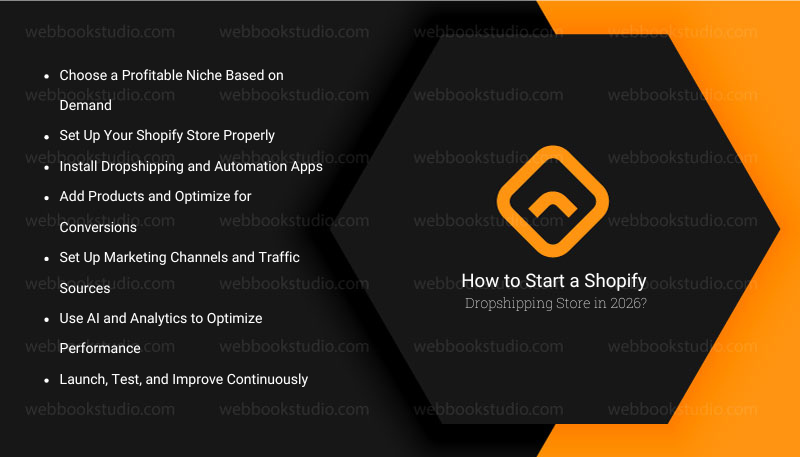
Starting a Shopify Dropshipping business in 2026 is no longer just about launching a store and building a structured e-commerce system. And that combines branding, automation, product validation, and customer experience. The entrepreneurs who succeed are the ones who treat it like a real business from day one, not a quick side hustle.
Step 1: Choose a Profitable Niche Based on Demand
Your first decision is selecting a niche with long-term demand, not just viral potential. In modern ecommerce, niches driven by lifestyle, problem-solving, and emotional buying tend to perform best.
Strong niche categories include:
- pet care products
- home fitness and wellness
- eco-friendly lifestyle goods
- smart home gadgets
- personalized gifts and print-on-demand products
These niches align with consumer behavior influenced by platforms like TikTok search and Instagram, where trends and buying decisions spread quickly. Use AI tools for trend research. Check Google Trends and supplier sales data.
Step 2: Set Up Your Shopify Store Properly
Your store foundation is built on Shopify, which provides everything needed to launch an online business without coding experience. Leverage Shopify’s AI builder, choose a clean theme focused on mobile friendliness, and get the most traffic. At this stage, focus on:
- clean store design and mobile responsiveness
- high-converting product page layouts
- clear branding and trust signals
- fast-loading theme optimization
A poorly designed store reduces conversions, even if your product is good.
Step 3: Install Dropshipping and Automation Apps
To streamline operations, integrate automation tools that handle product sourcing, inventory syncing, and order fulfillment.
Popular tools include:
- AutoDS
- CJdropshipping
- Zendrop
These platforms reduce manual workload and help ensure smoother logistics and faster fulfillment.
Step 4: Add Products and Optimize for Conversions
Once your niche and suppliers are ready, focus on selecting high-potential products. The source of products gets tested on a few winners with small ad budgets. Avoid random imports from low-cost marketplaces like AliExpress without validation.
Instead, prioritize:
- product-market fit
- strong visuals and videos
- clear product benefits
- competitive pricing strategy
This step directly affects conversion rate and profitability.
Step 5: Set Up Marketing Channels and Traffic Sources
No Shopify store succeeds without traffic. In 2026, the most effective traffic channels include:
- Organic short-form content on TikTok
- Influencer marketing on Instagram
- Paid ads through the Meta ecosystem
The key is to combine both organic and paid strategies instead of relying on one source alone. Market smart idea to start with organic content, then scale paid.
Step 6: Use AI and Analytics to Optimize Performance
Modern eCommerce success depends heavily on data and automation. Tools like Google Analytics help track traffic behavior, while email marketing platforms such as Klaviyo improve customer retention and lifetime value.
At the same time, AI tools like ChatGPT can help generate:
- product descriptions
- ad copy
- SEO content
- customer support responses
Optimize and iterate. Use analytics and A/B test everything. This allows store owners to scale faster with less manual effort.
Step 7: Launch, Test, and Improve Continuously
Launching your store is only the beginning. Successful Shopify Dropshipping businesses continuously:
- test product pages
- optimize conversion rates
- refine advertising campaigns
- improve supplier performance
- analyze customer feedback
Scaling happens through iteration, not instant success.
Realistic expectations: Most stores don’t hit big numbers immediately. Consistent testing and adaptation win. Many profitable operators run multiple niche stores.
However, a successful Shopify Dropshipping store in 2026 is built through structure, not shortcuts.
When you combine niche selection, strong branding, reliable suppliers, automation tools, and data-driven marketing, you create a scalable e-commerce system instead of a temporary online store.
Best Shopify Dropshipping Apps and Tools for 2026
Once you understand niches and trends, the next step in building a successful Shopify Dropshipping business is choosing the right tools.
In 2026, the difference between a failing store and a scalable B2B ecommerce website development brand often comes down to how well you use automation, analytics, and marketing platforms to reduce manual work and improve decision-making.
1. Automation and Product Sourcing Tools
Modern dropshipping businesses rely heavily on automation to manage product sourcing, inventory updates, and order fulfillment. Instead of manually handling suppliers, store owners now use platforms that connect everything into a single workflow.
Key tools include:
- AutoDS for product research, pricing automation, and order fulfillment
- CJdropshipping for global supplier access and faster shipping options
- Zendrop for streamlined fulfillment and branded e-commerce support
- AliExpress for low-cost product sourcing, though often slower shipping
These tools help automate repetitive tasks such as order routing, supplier communication, tracking updates, and inventory syncing, allowing entrepreneurs to focus on scaling their stores instead of managing logistics.
2. Print-on-Demand Platforms for Branded Stores
Print-on-demand has become a major part of Shopify Dropshipping, especially for entrepreneurs building branded niche stores. Instead of holding inventory, sellers can design and sell custom products that are produced only after a customer places an order.
Popular platforms include Printify and Printful. These tools are especially powerful for creating personalized products, building brand identity, and reducing upfront risk while scaling ecommerce operations.
3. Marketing, Analytics, and Growth Tools
In 2026, marketing is no longer guesswork, and it is data-driven and highly optimized. Successful Shopify stores rely on analytics and customer behavior tracking to improve conversions and maximize revenue.
Essential tools include:
- Google Analytics for tracking traffic sources, user behavior, and conversion funnels
- Klaviyo for automated email marketing, customer retention, and abandoned cart recovery
- Meta advertising ecosystem for paid social campaigns and retargeting strategies
- TikTok for organic content marketing and viral product discovery
These platforms help store owners understand what is working, where customers drop off, and how to increase lifetime value.
4. AI Tools for Content and Store Optimization
Artificial intelligence (AI) is now a core part of Shopify’s dropshipping operations. Manually writing everything, entrepreneurs use AI tools to speed up content creation and improve store performance.
A key example is ChatGPT for generating product descriptions, ad copy, SEO content, customer replies, and marketing ideas
AI is also being used for product research, competitor analysis, and predictive trend identification, making it easier to find winning products faster than traditional methods.
5. Why Tool Selection Matters in 2026
In today’s ecommerce environment, success is no longer determined by just picking the right product depends on how efficiently your store operates. Businesses that integrate automation, analytics, AI, and marketing tools into a single ecosystem can scale faster, reduce costs, and improve customer experience.
Stores that rely on manual processes, outdated sourcing methods, or weak marketing systems often struggle with low conversion rates, delayed fulfillment, and poor customer retention.
What Are the Biggest Shopify Dropshipping Trends Shaping 2026?
The top Shopify dropshipping trends to watch in 2026, including AI ecommerce automation, social commerce growth, sustainable products, subscription ecommerce models, product validation strategies, supplier management, high-converting store design, and the best Shopify dropshipping apps for beginners and growing brands.
1. How Is AI Transforming Shopify Dropshipping Stores?
AI isn’t a gimmick; it’s becoming table stakes. Shopify’s own tools, like Sidekick, are AI assistants, and Magic lets you generate product descriptions, images, email campaigns, and even automations with simple prompts. Sidekick can analyze your store data, suggest improvements, build workflows, and more.
2. Why AI-Shopify Dropshipping Works?
Customers expect personalized experiences. AI recommendation engines can boost conversions by 20-40% by showing relevant products based on browsing history, cart contents, or past purchases. Generative AI handles content creation at scale, saving hours.
Real example: A fitness accessories store uses AI to create dynamic bundles, complete your home gym setup, and personalize emails.
Result? Higher average order value and repeat purchases. Tools like AutoDS or built-in apps automate product research by scanning trends and competitor performance.
Logic and facts: Manual tasks eat profits. AI agents now act as personal shoppers on the backend, forecasting demand, adjusting pricing, and even chatting with customers. In the US, where time is money, this levels the playing field for solo entrepreneurs.
Getting started: Install Shopify’s free AI features. Test prompt-based product research, find trending eco-friendly kitchen gadgets with high search volume and low competition. Combine with apps for automated order fulfillment.
3. Why Does Sustainability Matter More Than Ever for Shopify Dropshipping?
Consumers, especially Millennials and Gen Z, who drive massive online spending, actively seek eco-friendly options. Sustainability has moved from nice-to-have to expectation, 78% prioritize transparent supply chains.
- Reasons: Climate awareness, social media amplification of ethical issues, and regulations pushing greener practices. Dropshippers who verify suppliers’ eco-credentials, recycled materials, and carbon-neutral shipping command higher prices and loyalty.
- Examples: Eco-friendly home goods like bamboo organizers, reusable kitchenware, or organic pet products. A store selling sustainable fashion accessories might highlight plastic-free packaging and partner with suppliers offering tracked, low-emission shipping.
- Solutions for you: Use apps to filter sustainable suppliers. Be transparent, show certifications or impact stats on product pages. This builds trust and reduces returns a big cost in dropshipping.
- Service opportunity: Offer “sustainability audits” as a consulting service to help other dropshippers vet suppliers and create green branding strategies.
4. How Important Is Hyper-Personalization in 2026 Shopify Dropshipping?
Generic stores lose out. AI enables tailoring everything, from product recommendations to pricing, emails, and even landing pages based on location, behavior, or preferences.
- Reasons: Shoppers feel seen, leading to higher loyalty and AOV. First-party data, your own customer info, replaces dying third-party cookies.
- Implementation: Use Shopify apps for dynamic content. Segment audiences like urban vs. suburban buyers and customize offers. For worldwide audiences, localize currency, language, and trends.
- Example: A phone accessories store shows MagSafe-compatible items to iPhone users automatically.
5. What Role Do Faster Shipping and Reliable Fulfillment Play?
Long shipping times remain a top complaint. Success in 2026 demands 3-7 day delivery, especially in the US. Because trust equals repeat business. Fast shipping reduces refunds and builds positive reviews.
Solutions: Hybrid models with US warehouses, print-on-demand for custom goods, or Shopify Collective. Be upfront with delivery estimates using AI widgets.
6. Are Niche and Branded Stores the Future?
Broad “general stores” struggle. Winning setups focus on specific audiences: pet parents, home organizers, biohackers, or wellness enthusiasts.
Top niches for 2026:
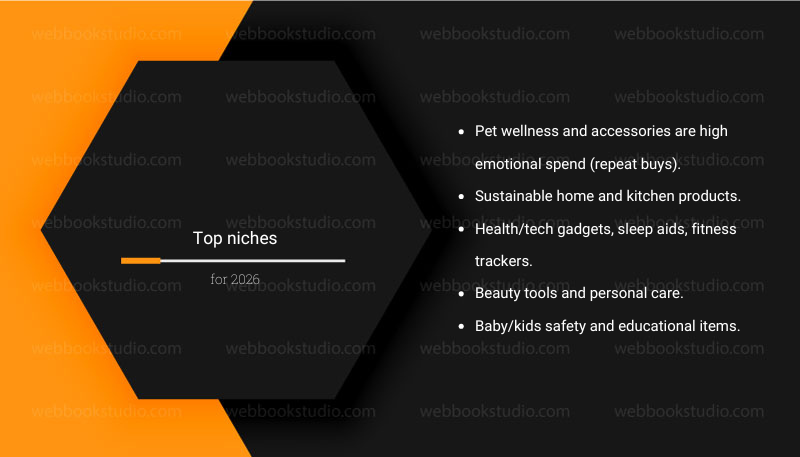
- Pet wellness and accessories are high emotional spend (repeat buys).
- Sustainable home and kitchen products.
- Health/tech gadgets, sleep aids, fitness trackers.
- Beauty tools and personal care.
- Baby/kids safety and educational items.
Deeper customer understanding leads to better marketing and lower ad waste. Build community via email/SMS. Unique advantage for low competition in sub-niches allows premium pricing.
Common Problems in Shopify Dropshipping and Proven Solutions
Understanding these mistakes early can save time, reduce financial loss, and significantly increase the chances of building a profitable e-commerce business.
| Problem Area | Common Problem | Proven Solution | Why It Matters |
| Supplier Issues & Quality Control | Inconsistent product quality damages customer trust and brand reputation | Vet suppliers carefully, order product samples first, use reliable supplier platforms with Shopify integration, and offer customer guarantees | Better product quality improves customer satisfaction and reduces refunds |
| Marketing & Customer Acquisition Costs | Rising ad costs on platforms like Meta and Google reduce profitability | Diversify traffic sources through SEO, content marketing, email lists, and organic social media on TikTok and Instagram | Lower dependency on paid ads improves long-term profit margins |
| Cart Abandonment & Low Conversions | Customers leave before completing purchases | Optimize checkout with one-click payments, trust badges, AI upsells, clear refund policies, and fast chatbot support | Improves conversion rates and increases completed sales |
| Scaling Operations | Managing orders, inventory, and customer service becomes overwhelming | Automate operations using inventory sync, order processing, and customer service tools; outsource tasks or hire virtual assistants as revenue grows | Automation saves time and supports business scalability |
| Business Opportunity | Many beginners struggle with setup and management | Offer a “Shopify Dropshipping Setup Service” including store creation, product validation, supplier setup, or ongoing management support | Creates an additional ecommerce-related income stream |
Even though Shopify Dropshipping has become more advanced and opportunity-driven in 2026, most beginners still fail for the same core reasons. The issue is rarely the platform itself; Shopify provides everything needed to build a store, but rather how entrepreneurs approach product selection, branding, marketing, and customer experience.
Why Shopify Dropshipping Offers Unique Opportunities Worldwide and in the US?
- In the US: High disposable income, credit card penetration, and demand for convenience. Domestic fulfillment options give you an edge over pure overseas models.
- Worldwide: Reach buyers in Europe, Asia, and beyond with localized stores. Currency conversion and international shipping apps make it seamless. Entrepreneurs in places like Bangladesh or other emerging markets can build global brands from a laptop.
- Facts: With billions of online shoppers and ecommerce penetration still growing in many regions, the ceiling is high for those who execute well.
Conclusion: The Future of Shopify Dropshipping in 2026.
Shopify dropshipping in 2026 rewards creativity, customer focus, and smart use of technology. The market is large and growing, but winners stand out by solving real problems and building genuine connections.
If you’re in the US aiming for domestic scale or targeting worldwide audiences, the tools and opportunities are better than ever. Start testing today, stay consistent, and adapt to the trends. Your next successful venture could be just a few smart decisions away.
Most relevant article: Top 5 Shopify Development Companies Offering Full-Service Solutions
FAQs: What’s Changing & How to Succeed in Shopify Dropshipping in 2026?
1. Is Shopify dropshipping still profitable in 2026?
Yes, for those who adapt. Margins average 15-30%, but smart operators hit higher through bundling, branding, and upsells. Focus on value and differentiation.
2. How much does it cost to start?
$29/month for Shopify basic + domain (~$15/year) + apps ($50-200). Test products with $100- $ 500 in ad spend.
3. How do I handle shipping complaints?
Set clear expectations, choose reliable suppliers, and offer tracking. Provide excellent support to turn issues into opportunities for loyalty.
4. What about legal stuff in the US?
Register as an LLC for protection. Comply with advertising laws, collect sales tax (Shopify helps), and respect privacy (GDPR/CCPA).
5. What are the best products to sell?
Solve problems in evergreen niches: pet care, home organization, wellness, and eco-products. Avoid oversaturated generics.