

Why Marketing Strategy for Startups Matters More Than Ever in 2026?
Marketing strategy for startups is often the biggest challenge founders face when trying to achieve sustainable growth with limited resources. Many early-stage businesses struggle to find the right audience, generate consistent leads, and convert attention into real revenue.
Without a clear path to Product-Market Fit and effective Customer Winning, even the most innovative ideas fail to achieve traction. This is where a structured approach built on Digital Marketing and a focused Go-to-Market Strategy becomes essential.
To succeed, startups must move beyond guesswork and rely on data-driven decisions supported by solid Market Research and clear audience targeting, if operating in B2B or B2C markets.
In today’s competitive digital world, integrating Artificial Intelligence into Marketing Automation is no longer optional, and it’s a competitive advantage. The right strategy isn’t about spending more, but building a smart system that combines creativity, data, and execution.
Here you’ll discover proven, budget-friendly strategies that help startups move from uncertainty to predictable growth step by step.
What is a Marketing Strategy for Startups?
A marketing strategy for startups is a focused, data-driven plan designed to help early-stage businesses reach the right audience, validate their offer, and grow efficiently with limited resources.
Unlike traditional companies, startups don’t have the luxury of large budgets or established brand recognition, so every decision must directly support achieving Product-Market Fit and accelerating Customer Acquisition.
At its core, a startup marketing strategy combines elements of Digital Marketing with a clear Go-to-Market Strategy to ensure that the product reaches the right people at the right time.
This process begins with deep Market Research to understand customer needs, behaviors, and pain points.
A well-defined strategy also maps out the entire Customer Journey from awareness to decision using a structured Marketing Funnel.
Instead of relying on guesswork, startups use measurable frameworks like SMART Goals to set clear objectives and track performance.
In simple terms, a startup marketing strategy is not about doing everything, but about doing the right things strategically, testing quickly, and scaling what works.
Top 10 Proven Marketing Strategies for Startups with Low Budget, but High Impact.
Now that you’ve built a solid foundation, it’s time to apply proven, cost-effective strategies that drive real growth. The key is not to use all of them at once, but to test, measure, and scale the ones that align with your audience and goals.
Each of the following strategies supports faster customer achievement while improving long-term Return on Investment (ROI).
Here are 10 battle-tested strategies that work for resource-limited teams. Each includes why it succeeds, how to implement it, and the underlying logic.
1. Master Content Marketing and SEO Integration
Content marketing paired with search engine optimization consulting services (SEO) forms the foundation of any low-budget marketing strategy for startups.
You create valuable articles, guides, or videos that answer customer questions, then optimize them so search engines deliver free traffic over months or years.
Content Marketing can build authority and trust, and it’s one of the most powerful low-cost strategies for startups.
- Create blogs, guides, videos, and case studies
- Real customer problem-solving or informative articles
- Establish thought leadership business info
Optimize with clear headings, internal links, and a mobile-friendly design. Publish consistently once or twice a month beats sporadic efforts.
- Why it works: Drives organic traffic and supports Search Engine Optimization. Unlike paid ads that stop when spending ends, optimized content keeps attracting visitors. It positions your startup as an expert, builds trust, and nurtures leads naturally. Studies show organic channels deliver stronger ROI for early-stage companies.
- How to start: Identify your audience’s pain points through free tools like Google Keyword Planner or AnswerThePublic. Write in-depth blog posts (1,500+ words) around those questions. Use free or low-cost platforms like WordPress.
- Reasoning: Customers research before buying. If your content appears in their search results, you enter the conversation early without paying for clicks. Over time, this compounds as Google rewards helpful, regularly updated material.
- Example: A SaaS startup writing “How to Integrate Landing Pages with Your CRM for Better Lead Management?” ranks for related searches and converts readers into trial sign-ups.
2. SEO Optimized Your Website with GBP for Local and Beyond
Claim and perfect your free Google Business Profile (GBP). Add accurate details, photos, hours, and respond to every review.
- Local searches drive foot traffic or website visits for many startups. Even online-first businesses benefit from “near me” visibility and map pack rankings.
- Post regular updates, share offers, and encourage honest reviews. Use location-specific keywords naturally in descriptions.
Google prioritizes complete, active profiles. This zero-cost tactic delivers immediate visibility in a world where 50%+ of searches carry local intent.
SEO for Long-Term Growth: Search Engine Optimization (SEO) helps your startup get discovered by users actively searching for solutions.
- Target long-tail keywords
- Optimize on-page content management
- Build backlinks
Get Result: Sustainable traffic without ongoing ad spend.
3. Social Media Marketing (SMM) Expand Reach Short-Form Video Content on Social Platforms
Social Media Marketing (SMM) allows startups to connect directly with their audience.
- Focus on 1–2 platforms
- Share valuable and engaging content
- Build a community
Goal for SMM: Increase Brand Awareness.
Why Leverage Short-Form Video Content on Social Platforms?
Create quick, authentic videos for TikTok, Instagram Reels, YouTube Shorts, or LinkedIn posts. Focus on tips, behind-the-scenes, or problem-solving demos, no fancy production needed.
- Why it works: Video dominates feeds and search in 2026. Short formats boost engagement and algorithm reach without big budgets.
- Reasoning: People connect with faces and stories more than text. Algorithms reward consistent, engaging creators, giving startups organic exposure that paid boosts can’t match sustainably.
- Implementation: Film with your smartphone. Keep videos under 60 seconds. Add captions and trending audio. Post 3–5 times weekly on 1–2 platforms where your audience hangs out.
4. Email Marketing High ROI Channel: Create a list for Lead Magnets.
Build and nurture an email list, business Lead collection, and offer free, valuable resources like checklists, templates, or mini-guides in exchange for emails. Then send helpful newsletters that educate and occasionally promote.
- Why it works: Email remains one of the highest-ROI channels, with returns often $36–$45 per dollar spent. You own the list, unlike social followers subject to algorithm changes.
- Reasoning: Buyers move through the awareness-to-decision stages. Regular value-driven emails keep your startup top-of-mind and convert warm leads more cheaply than cold outreach.
- Steps: Use the free tiers of MailerLite or similar services. Create a simple landing page. Segment lists for personalized sends.
Email Marketing remains one of the highest ROI channels.
- Build an email list early
- Send personalized campaigns
- Nurture leads over time
Tools like Mailchimp make this easy and scalable.
5. Referral & Community Marketing and Partnership Programs
Turn happy customers into advocates with simple incentives, like discounts for successful referrals. Partner with complementary non-competing businesses.
- Why it works: Word-of-mouth builds credibility faster than self-promotion. Referrals often bring higher-quality, lower-cost customers.
- Reasoning: Trust transfers easily between peers. In tight budgets, leveraging existing networks multiplies reach without ad spend.
- How it works: Set up a basic system with unique codes. Reach out to local or niche partners for cross-promotions.
Harness Referral & Community Marketing for Leverage Users:
- Turn your existing users into promoters.
- Build referral programs
- Create communities (groups, forums)
Encourage word-of-mouth as a cost-effective way to boost Customer Acquisition.
6. Engage Actively on Social Media and Communities
Choose 1–2 social media platforms aligned with your customers. Post value, answer questions, join relevant groups or forums, and build genuine relationships.
- Why it works: Organic social builds community and humanizes your brand. Engagement signals strength to algorithms.
- Reason: Social proof and conversations drive discovery. Startups that listen and help others earn loyalty that paid ads rarely create.
- Tips: Respond quickly. Share user-generated content. Use hashtags strategically but sparingly.
7. AI-Powered Marketing Automation Use User-Generated Content Smartly
Scale Efficiently AI automation created for User-Generated Content and Testimonials. Modern startups leverage Artificial Intelligence to automate and optimize.
- Automate email sequences
- Analyze customer behavior
- Improve targeting
Combine with Marketing Automation for scalable growth. Encourage customers to share their experiences. Repost with permission and feature stories on your site and socials.
- Why it works: Authentic voices from real users convert better than polished marketing copy.
- Reasoning: People trust peers over brands. This tactic amplifies social proof at virtually no cost.
- Implementation: Run simple contests or just ask politely after good service. Highlight results with before/after or quotes.
8. Focus on Conversion Rate Optimization on Your Website Strategic Partnerships
Ensure your site loads fast, looks professional, clearly explains your offer, and includes strong calls-to-action (CTA). Test small changes like button colors or headlines.
- Why it works: More conversions from existing traffic multiply results from other efforts without extra acquisition costs.
- Factor: A leaky website wastes marketing dollars. Fixing it improves ROI across all channels.
- Tools: Free options like Google Optimize or alternatives and heatmaps via free tiers.
Strategic Partnerships collaborate to grow with complementary brands.
- Co-marketing campaigns
- Guest content
- Joint offers
Expand reach without increasing budget.
9. Influencer Marketing Build Trust Faster
Experiment with Micro-Influencer or Community Collaborations. Influencer Marketing, especially micro-influencers, can help startups gain credibility quickly.
- Partner with niche creators
- Focus on authentic promotions
- Leverage audience trust
Partner with smaller influencers or active community members in your niche for shoutouts or co-created content.
- Why it works: Micro-influencers often deliver higher engagement at lower or no cost through value exchanges.
- Approach: Offer free products/services or joint webinars in return for promotion.
- Reasoning: Targeted reach from trusted voices beats broad, expensive campaigns.
10. Paid Ads: Test with Small Budget
Implement smart, limited paid amplification only after proving organic. Once organic channels show traction, use small budgets on targeted social or search ads to boost top performers. Focus on high-intent keywords and retargeting.
Use paid ads strategically, not aggressively.
- Start with small budgets
- Test creatives and audiences
- Track performance
and optimize campaigns using conversion rate optimization techniques.
- Why it works: Data from organic efforts guides smarter spending, reducing waste.
- Guideline: Start with $5–10/day tests. Track everything.
- Reasoning: Paid works best as fuel on proven fires, not the main engine for bootstrapped startups.
However, you don’t need a big budget to succeed need the right strategy, focus, and consistency. Start with 2–3 of these strategies, measure results using tools like Google Analytics, and scale what delivers the best outcomes.
Budget Allocation for Startup Marketing: Do More With Less
One of the biggest challenges in any marketing strategy for startups is deciding how to spend a limited budget without wasting resources.
Since early-stage companies don’t have the luxury of large-scale spending, every dollar must directly support growth, learning, and measurable outcomes, especially improving customer winning and long-term Return on Investment (ROI).
| Category | Strategy Focus | Budget Priority | Purpose / Outcome |
| Core Growth Channels | Content Marketing + SEO | High (40–50%) | Build long-term organic traffic, authority, and sustainable growth |
| Engagement & Community | Social Media Marketing (SMM) | Medium (20–30%) | Increase brand visibility, engagement, and audience trust |
| Testing & Experimentation | Paid Ads + new channels | Low (10–20%) | Test campaigns, audiences, and messaging for scalable opportunities |
| Tools & Analytics | Google Analytics + automation systems | Medium (10–15%) | Track performance, measure Customer Acquisition, and improve Return on Investment |
| Optimization Layer | Marketing Funnel + Customer Journey | Ongoing | Ensure every stage (awareness to conversion) is optimized for efficiency |
Common Mistakes Startups Must Avoid in Marketing
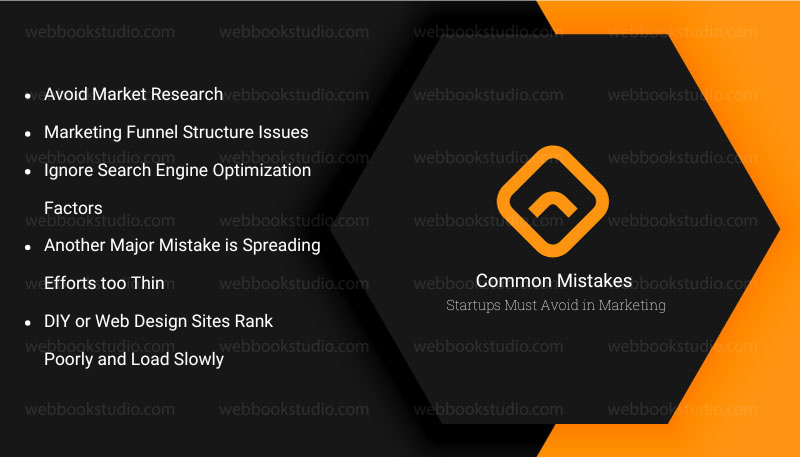
Even with a strong marketing strategy for startups, many founders still fail because they repeat avoidable mistakes that weaken growth, waste budget, and slow down customer investment. Understanding these pitfalls early can significantly improve your chances of building a scalable and profitable system.
1. Avoid Market Research
One of the most critical mistakes is skipping proper Market Research. Without understanding customer pain points, behavior, and demand, startups often build campaigns that look good but fail to convert. Also delays achieving real Product-Market Fit, which is the foundation of any successful business.
2. Marketing Funnel Structure Issues
Another common issue is the lack of a structured funnel. Many startups invest heavily in traffic generation but fail to design a clear Marketing Funnel or optimize the full Customer Journey. As a result, potential customers drop off before converting, leading to poor ROI despite high effort.
3. Ignore Search Engine Optimization Factors
Startups also tend to ignore optimization and rely only on execution. Without applying Conversion Rate Optimization, they miss opportunities to improve performance at every stage.
Every business needs an online home, and controlling social media alone isn’t enough for credibility or long-term SEO.
Similarly, failing to track results using tools like Google Analytics makes it impossible to understand what is working and what needs improvement.
4. Another Major Mistake is Spreading Efforts too Thin.
With millions of small businesses still lacking optimized sites, the addressable market stays vast, especially locally in the US or emerging markets worldwide.
Focusing on high-impact channels like Content Marketing, SEO, or SMM, many startups try to be everywhere at once. This leads to inconsistent messaging, weak execution, and low efficiency, reducing overall Return on Investment.
However, most marketing failures don’t come from lack of effort, but from lack of focus, structure, and data-driven decision-making. Avoiding these mistakes puts you ahead of 90% of early-stage startups.
5. DIY or Web Design Sites Rank Poorly and Load Slowly.
Small businesses waste money on flashy sites that don’t generate leads. Focus on conversion-oriented design with clear CTAs, trust signals, and analytics setup.
For example, a local service business sees 30% more inquiries after a clean, fast redesign of highlight reviews and booking forms. So, combine technical SEO (speed, schema, mobile-first) with content strategy. Provide ongoing optimization as a service.
Many entrepreneurs face slow sites that lose visitors, poor mobile experiences, weak SEO that hides them from search, or designs that don’t match their brand.
A good web developer delivers measurable improvements, such as faster load times, 7–20% higher conversions, or better rankings that drive organic traffic.
Implementing Your Overall Marketing Strategy for Startups: Practical Guidance
Start small: Pick 2–3 strategies from the list that match your strengths and audience. Track results with free tools like Google Analytics. Allocate time weekly. Consistency beats perfection.
Web Service: For service-based ideas like web development, combine organic content with local SEO and referrals. Avoid spreading thin across every platform. Test, measure, and double down on what moves the needle.
Budget wisely: Many successful startups allocate 15–30% of early revenue to marketing once traction begins, but prioritize time over dollars.
Conclusion: Turn Your Startup Marketing Into a Growth System
Building a successful marketing strategy for startups is not about doing more, but doing what matters most, consistently and strategically.
Most early-stage founders struggle not because their product is weak, but because their marketing lacks structure, focus, and a clear path to sustainable growth in Customer Acquisition.
Startups that win don’t rely on guesswork. They build systems grounded in research, clarity, and execution.
By combining Market Research with a well-defined Go-to-Market Strategy, and consistently refining their approach using data from tools like Google Analytics, they create predictable, scalable growth instead of random results.
If you focus on basic root Content Marketing, SEO, or SMM, the goal is the same: to build trust, attract the right audience, and guide them through a clear Marketing Funnel that leads to real conversions.
When supported by Conversion Rate Optimization (CRO) and continuous testing, even small-budget startups can compete with established brands.
In today’s environment, success also depends on adaptability. Tools for communication and embracing AI for smarter targeting and automation allow virtual office for startups to scale faster while maintaining efficiency through Marketing Automation.
Ultimately, the difference between struggling startups and successful ones comes down to execution. Start small, focus on what works, eliminate what doesn’t, and continuously improve.
Relevant article: Top 10 CRO Tools for E-commerce Websites.
FAQ: Startup Marketing Strategy Questions Answered
1. What are the 4 Ps of startup marketing?
The 4 Ps of Marketing include Product, Price, Place, and Promotion. For startups, this framework ensures that every marketing decision aligns with customer needs, positioning, and distribution strategy.
2. How much should a startup with a small budget spend on marketing?
Focus on time first. When revenue starts flowing, consider allocating 8–15% initially, prioritizing organic channels. Even $500–$1,000/month can amplify proven tactics.
3. What is the 80/20 rule in startup marketing?
The Pareto Principle states that 80% of results often come from 20% of efforts. Startups should focus on the few strategies that deliver the highest impact instead of spreading resources too thin.
4. How long does it take to see results from these strategies?
SEO and content may take 3–6 months to gain traction, while social engagement and referrals can deliver faster wins. Paid tests show results more quickly but require data from organic efforts.
5. How do startups market with no budget?
Startups with no budget rely heavily on organic strategies like content creation, SEO, and community building. These approaches reduce dependency on paid ads while improving long-term Return on Investment.
6. What is the role of AI in startup marketing?

Artificial Intelligence (AI) helps automate campaigns, personalize messaging, and improve targeting. Combined with Marketing Automation, it allows startups to scale faster with fewer resources.